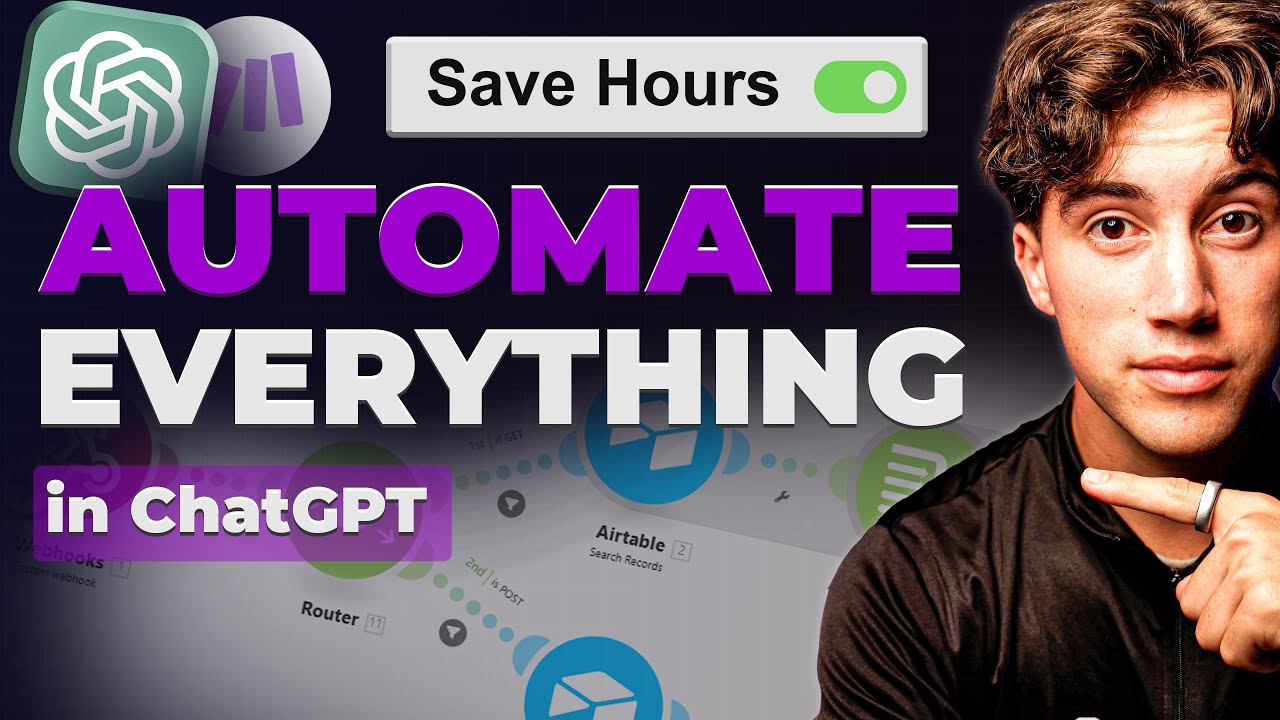
When I, PromptLix, first started using ChatGPT to handle repetitive tasks, I was blown away. The truth is, automation doesn’t have to be complicated. You can reduce hours of manual work each week just by teaching a conversational AI to do certain things for you. From generating emails to summarizing reports, ChatGPT can handle much of the grunt work—but only if you approach it like a human problem solver, not a robot enthusiast.
Identify Your Repetitive Tasks
The first step I always tell clients is to look honestly at their day. What tasks feel like déjà vu every morning? Maybe you draft dozens of emails or spend half an hour compiling data from multiple sources. When I sit down, I literally write a list of everything I do repeatedly, including those tiny mental tasks that sap energy, like writing follow-ups or checking off routine steps. Once you have that list, the next step is to figure out which ones ChatGPT can realistically handle without your constant oversight.
Crafting Clear Prompts
It’s not enough to just ask ChatGPT vaguely. I’ve seen people waste hours with poorly phrased prompts. For example, “Write a report” is too generic. I coach users to break the task down: define the structure, tone, and data needed. When I teach this, I call it “prompt surgery”—cutting away ambiguity until the instructions are precise but flexible. A good prompt is like giving a human assistant a detailed roadmap: the AI can’t guess your intent unless you show it.
Setting Up Integrations
Automation isn’t just about ChatGPT; it’s about connecting it to the tools you already use. In my consulting work, I integrate ChatGPT with email platforms, Slack, and Google Sheets. The key is to start small. I often have clients test with one workflow—say, summarizing daily meeting notes into a Slack message—before scaling up. The satisfaction of seeing an automated message appear correctly each morning is like turning on a light switch. It builds confidence and momentum.
Creating Templates for Consistency
Humans crave consistency, and so does AI. When I design workflows, I create templates for recurring tasks. For instance, if you regularly send performance summaries, I build a ChatGPT template with placeholders for metrics. You just drop in new data, and the AI fills in the text. This approach prevents errors, ensures your communication feels polished, and saves the mental load of starting from scratch every time. Templates are your invisible safety net.
Leveraging ChatGPT’s Memory
If you’re using a version of ChatGPT with memory capabilities, this can be a game-changer. I encourage users to let the AI remember style preferences or frequently used phrases. Early in my own experiments, I kept repeating instructions like a broken record. Once I enabled memory, the AI began adapting automatically, making fewer mistakes and even suggesting better ways to phrase things. It’s like having a junior team member who learns as they work, without the need for constant correction.
Handling Errors Gracefully
Let’s be honest: ChatGPT isn’t perfect. There will be mistakes, misinterpretations, or hallucinations. When I train clients, I emphasize building checkpoints into every workflow. That could mean reviewing a summary before sending or validating data output before integration. I call it “automation with a safety belt.” The goal isn’t to remove human oversight entirely—it’s to move from doing everything manually to supervising intelligently. Mistakes become learning points rather than disasters.
Automating Personal Workflows
Many people assume automation is only for big business. I’ve found the opposite. ChatGPT can streamline personal workflows just as effectively. I’ve set it up to manage recurring grocery lists, plan meal prep, and even draft my weekly to-do lists. The difference is emotional: it reduces friction. When your brain isn’t juggling small tasks constantly, you gain mental bandwidth to focus on the creative or strategic work that actually matters.
Iterative Refinement
Automation is never truly “set it and forget it.” I tell teams to treat each workflow like a living system. Start with a small implementation, observe the results, and refine. In my own practice, I tweak prompts weekly, adjusting tone, format, and scope based on what actually works in real-world conditions. Over time, the AI begins to anticipate needs more accurately. It’s not about perfection from day one—it’s about steady improvement.
Measuring Success
You can’t know if automation is working unless you measure it. I recommend tracking time saved, errors reduced, or the number of repetitive tasks fully offloaded. In my experience, even a small reduction of 30 minutes per day across multiple tasks compounds into hours of regained focus per week. This data isn’t just metrics; it’s proof that your workflow decisions are paying off, and it keeps you motivated to expand automation gradually.
Advanced Techniques for Power Users
Once you’ve mastered basics, there are advanced techniques. For instance, I use ChatGPT to combine multiple inputs—emails, spreadsheets, and meeting notes—into a single executive summary. I also experiment with branching workflows: if one output meets conditions, the AI triggers the next step automatically. This is where the system begins to feel like a real assistant, capable of handling complex chains of tasks that would otherwise eat your time and sanity.
Keeping Human Judgment in the Loop
Finally, never forget that AI is a tool, not a replacement for judgment. I have clients who became over-reliant and ended up sending impersonal emails or overlooking errors. My rule is simple: let ChatGPT handle execution, but you keep control of decisions. Think of it as delegating the heavy lifting while you remain the conductor of the orchestra. This balance protects quality, maintains human touch, and prevents frustration down the line.
FAQs
Q1: Can ChatGPT really replace all repetitive tasks?
No, not all. In my years of consulting, I’ve learned that ChatGPT excels at structured tasks, like summarizing, drafting text, or organizing data. It struggles with nuanced judgment calls, unpredictable scenarios, or tasks requiring emotional intelligence. Treat it as a partner, not a replacement.
Q2: How do I prevent errors in automated workflows?
Introduce checkpoints. For example, if ChatGPT generates reports, quickly review key figures or summaries before sharing. In my experience, building verification into your workflow takes minimal time but saves you from costly mistakes.
Q3: Is it complicated to integrate ChatGPT with my existing tools?
Not if you start small. Begin with one application, like Gmail or Google Sheets. I usually advise testing one workflow first, confirming it works, and then scaling gradually. Complexity comes when you try to automate everything at once.
Q4: How do I make ChatGPT “remember” my style preferences?
Use memory features if available or create detailed templates. Early on, I manually repeated preferences until the AI started learning. Templates and consistent corrections teach it how you like messages formatted and phrased.
Q5: What if my workflow changes frequently?
Treat automation as iterative. I recommend revisiting prompts weekly or monthly, refining them to match evolving needs. Flexibility ensures ChatGPT stays helpful and relevant rather than becoming a rigid system that no longer fits your workflow.
References
OpenAI. “ChatGPT Product Documentation.” OpenAI, 2026.
Sharma, R. “Practical AI for Small Teams.” TechPress, 2024.
Johnson, L. “Workflow Automation Using AI Tools.” Productivity Journal, 2025.
Smith, K. “Bridging AI and Human Oversight.” Journal of Digital Workflows, 2023.
Disclaimer
This article is for educational and informational purposes only. PromptLix does not provide professional, legal, or financial advice, and results may vary based on individual circumstances.
Author Bio
PromptLix is a professional consultant and writer specializing in AI-assisted productivity and workflow optimization. With over 20 years of experience in smart automation and efficiency strategies, PromptLix has helped individuals and businesses streamline operations using practical AI tools. Their work focuses on human-centric solutions that maximize time, reduce errors, and empower users to work smarter.