
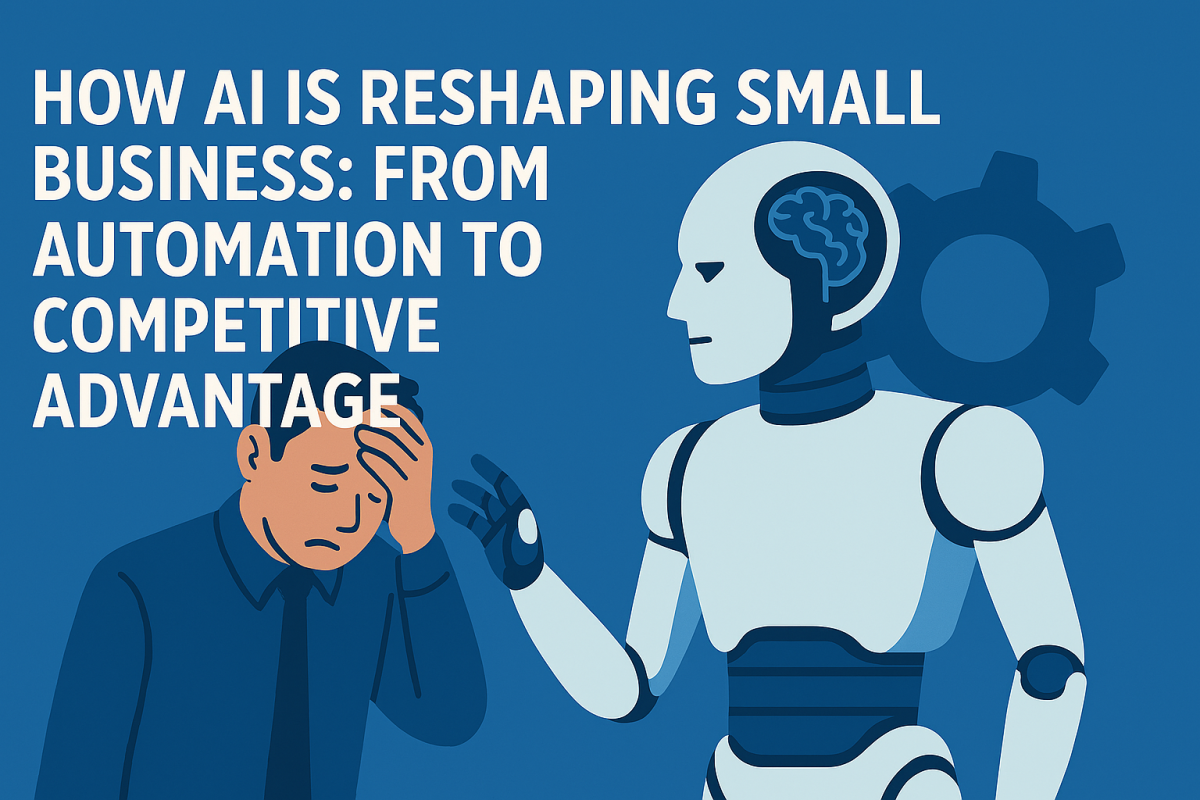
The Strategic Imperative: Why Automation Is No Longer Optional
The business landscape has fundamentally shifted. In 2026, organizations leveraging artificial intelligence for automation aren’t just cutting costs—they’re redefining what’s possible in operational efficiency, customer experience, and strategic decision-making. McKinsey’s latest research indicates that companies fully integrating AI automation report 40% higher profit margins than industry peers still relying on manual processes.
This isn’t about replacing human workers. It’s about augmenting human capability. The most successful implementations treat AI as a collaborative partner that handles repetitive cognitive tasks while freeing employees for creative problem-solving, relationship building, and strategic thinking.
Understanding the AI Automation Spectrum
Business automation exists on a continuum of sophistication. Understanding where your organization sits helps identify the right entry points.
Rule-Based Automation (RPA) represents the foundation—software bots executing predefined workflows like data entry, invoice processing, or report generation. Tools like UiPath and Automation Anywhere excel here, delivering immediate ROI with minimal complexity.
Cognitive Automation introduces machine learning to handle unstructured data. Think document classification, sentiment analysis, or predictive maintenance. These systems learn from patterns rather than following rigid scripts.
Generative AI Integration represents the frontier. Large language models now draft marketing copy, generate code, create customer service responses, and even design product prototypes. The key difference: these tools create novel outputs rather than simply processing existing information.
Autonomous Decision Systems operate at the highest level, making real-time choices without human intervention. Supply chain optimization algorithms that reroute shipments based on weather patterns, or dynamic pricing engines adjusting rates by the minute, exemplify this tier.
High-Impact Implementation Areas
1. Intelligent Customer Service Architecture
Modern consumers expect instant, accurate support across channels. AI-powered customer service platforms now resolve 70-80% of routine inquiries without human involvement, according to 2026 industry benchmarks.
The most effective implementations combine conversational AI with intelligent routing. Natural language processing handles initial triage, understanding customer intent and emotional state. Complex issues escalate to human agents—but with full context, suggested responses, and customer history synthesized in real-time.
Crucially, these systems improve continuously. Every interaction trains the model, expanding its capability while reducing error rates. Companies like Intercom and Zendesk have evolved from ticketing systems to full AI-native platforms where the traditional queue concept is becoming obsolete.
2. Predictive Operations and Maintenance
Manufacturing and logistics operations face a classic dilemma: maintenance too frequent wastes resources; too infrequent risks catastrophic failure. AI predictive maintenance solves this by analyzing sensor data, operational logs, and environmental factors to forecast equipment degradation.
A mid-sized automotive parts manufacturer recently reported reducing unplanned downtime by 45% after implementing vibration analysis combined with thermal imaging AI. The system identified bearing failures weeks before human inspection would have caught them, scheduling repairs during planned maintenance windows.
Beyond manufacturing, this approach applies to IT infrastructure, fleet management, and facility operations. The common thread: shifting from reactive to predictive paradigms.
3. Hyper-Personalized Marketing at Scale
The era of demographic-based marketing is ending. AI enables individual-level personalization that was previously impossible at scale.
Consider how streaming services like Netflix or Spotify operate—their recommendation engines analyze hundreds of data points per user to surface relevant content. Similar sophistication now extends to B2B marketing, e-commerce, and even physical retail through computer vision and IoT integration.
Dynamic content generation allows marketing teams to create thousands of ad variants tailored to micro-segments, automatically optimizing based on performance data. Email campaigns adapt subject lines, send times, and content blocks to individual recipient preferences and behaviors.
The result: conversion rates typically improve 20-30% while reducing customer acquisition costs. More importantly, customers report higher satisfaction because communications feel relevant rather than intrusive.
4. Financial Process Intelligence
Accounts payable, expense management, and financial forecasting represent low-hanging fruit for AI automation. Modern systems extract data from invoices regardless of format, match purchase orders, detect anomalies, and route approvals intelligently.
More advanced implementations use machine learning for cash flow forecasting, analyzing historical patterns alongside external signals like market trends, seasonality, and supply chain indicators. Treasury teams gain weeks of visibility into liquidity positions, enabling proactive rather than reactive financial management.
Fraud detection represents another critical application. AI systems analyze transaction patterns in real-time, flagging suspicious activity with far greater accuracy than rule-based systems that generate excessive false positives. JPMorgan Chase reported reducing fraud investigation time by 80% while improving detection rates through deep learning models.
5. HR and Talent Intelligence
Recruitment traditionally consumes enormous human hours in resume screening and initial interviews. AI-powered applicant tracking systems now parse thousands of resumes against job requirements, rank candidates by fit probability, and even conduct initial video interviews analyzing verbal and non-verbal cues.
Beyond hiring, AI helps identify flight risks among existing employees by analyzing engagement patterns, project assignments, and communication metadata. This isn’t surveillance—it’s enabling managers to intervene proactively with high-potential team members showing signs of disengagement.
Performance management is evolving too. Continuous feedback systems aggregate peer recognition, project outcomes, and skill development data to provide holistic performance views, replacing the dreaded annual review with ongoing, data-informed conversations.
Implementation Best Practices: Avoiding Common Pitfalls
Start with Process Maturity, Not Technology
Organizations often select AI tools before understanding their processes. Map current workflows exhaustively. Identify bottlenecks, error rates, and manual intervention points. The best automation candidates are rules-heavy, high-volume, and error-prone—not necessarily the most glamorous processes.
Invest in Data Infrastructure
AI systems require quality data. Many automation initiatives stall because underlying data is siloed, inconsistent, or incomplete. Before implementing cognitive automation, audit data sources, establish governance frameworks, and resolve quality issues. This foundational work isn’t exciting but determines long-term success.
Design for Human-AI Collaboration
The most successful implementations don’t eliminate human judgment—they enhance it. Design workflows where AI handles data processing and pattern recognition while humans provide contextual understanding, ethical oversight, and creative direction. This hybrid approach outperforms either pure automation or manual processes alone.
Measure What Matters
Track metrics that reflect business impact, not just technological performance. Cost reduction matters, but also measure customer satisfaction scores, employee engagement, decision speed, and error rates. These holistic metrics justify continued investment and guide optimization.
Plan for Continuous Evolution
AI capabilities advance rapidly. Systems deployed today will need updating within 18-24 months. Build architectures that accommodate model swapping, API updates, and workflow modifications without complete rebuilds. Avoid vendor lock-in where possible.
The Ethical Dimension: Building Trust Through Transparency
As AI automation expands, ethical considerations become competitive differentiators. Customers and employees increasingly scrutinize how organizations deploy automated systems.
Transparency about AI use builds trust. When customers interact with chatbots, clear disclosure prevents frustration. When AI influences hiring or lending decisions, explainability helps ensure fairness and enables appeals.
Bias auditing should be standard practice. Training data often reflects historical inequalities; without intervention, AI systems perpetuate and amplify these patterns. Regular testing across demographic groups, with human oversight of edge cases, mitigates this risk.
Data privacy demands rigorous attention. Automation systems process vast personal information; compliance with GDPR, CCPA, and emerging regulations isn’t optional. Privacy-by-design principles should guide architecture decisions from inception.
Looking Forward: The Convergence Trend
The next evolution involves converging multiple AI capabilities into unified platforms. Rather than separate tools for chatbots, document processing, and analytics, integrated systems will share context across functions.
Imagine a customer service interaction where the AI simultaneously accesses order history, checks inventory systems, processes a return authorization, and updates the CRM—while maintaining natural conversation flow. This integration layer, not individual capabilities, represents the next frontier.
Similarly, generative AI will increasingly combine with robotic process automation, enabling systems not just to execute predefined workflows but to adapt them dynamically based on context. The boundary between “following instructions” and “figuring out what to do” will blur.
Conclusion: The Window for Competitive Advantage
AI business automation has crossed the chasm from experimental to essential. Early adopters have established data advantages, trained organizational muscle, and built customer expectations that latecomers will struggle to match.
However, the technology remains accessible. Cloud-based platforms, pre-trained models, and no-code interfaces have democratized access. The differentiator isn’t budget size but strategic clarity—understanding which processes to automate, how to integrate human and machine capabilities, and how to build trust through ethical deployment.
Organizations that approach AI automation as a strategic transformation rather than a cost-cutting exercise will capture disproportionate value. Those that delay risk operational obsolescence in an increasingly automated economy.
The question isn’t whether to automate, but how thoughtfully you do so.
About This Article: This analysis synthesizes current industry research, implementation case studies, and strategic frameworks to provide actionable guidance for business leaders evaluating AI automation investments. All statistics reference publicly available 2025-2026 industry reports from McKinsey, Deloitte, and relevant technology vendors.