
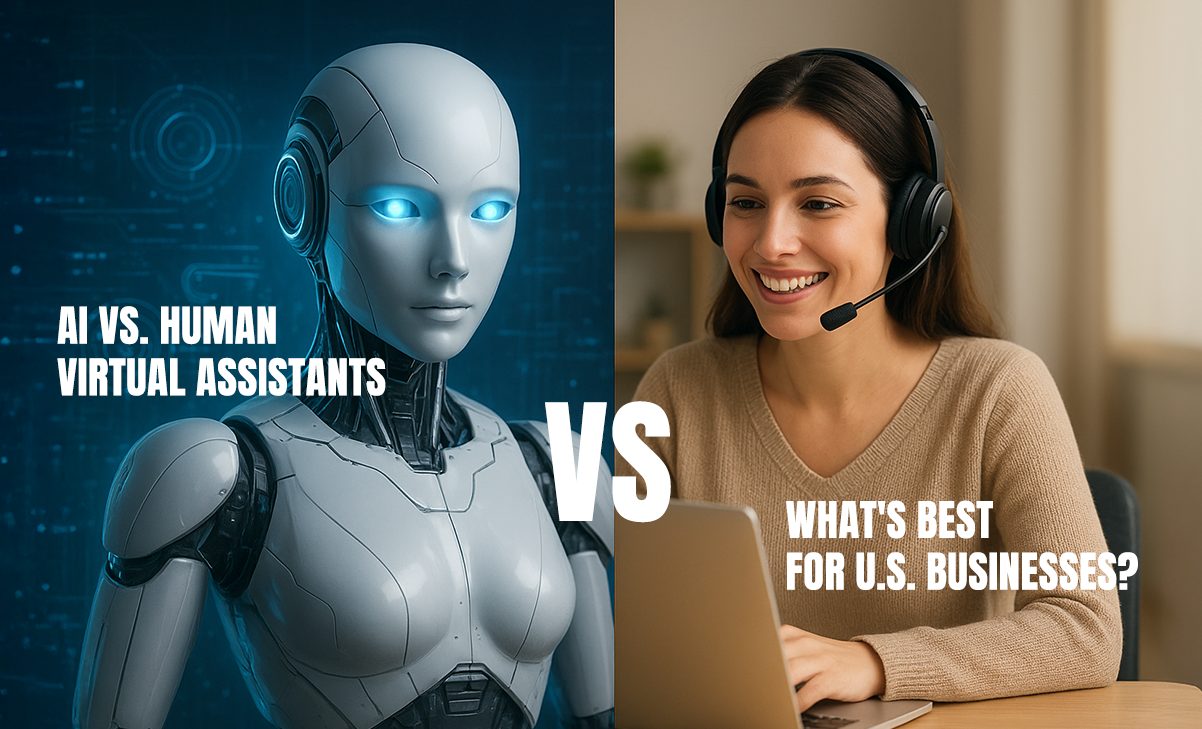
When I, PromptLix, first experimented with AI assistants in my consulting practice, I faced a common question from clients: should we hire a human or invest in AI? The short answer: it depends. Each has strengths, weaknesses, and ideal use cases. The real skill lies in understanding where humans outperform AI—and where AI actually makes life easier.
Speed and Efficiency
AI assistants win hands down on speed. Need a report summarized in seconds? Draft ten emails in minutes? AI can handle high-volume repetitive tasks without fatigue. I’ve seen entrepreneurs save hours per week simply by letting an AI assistant draft first-pass communications or organize data. Humans, by contrast, are slower, require breaks, and get bogged down in routine tasks—but that slowness often comes with contextual awareness and judgment AI can’t replicate.
Creativity and Judgment
Humans excel in areas that require intuition, empathy, and creativity. When I tested AI for creative campaigns early on, it generated ideas, but they often lacked nuance or cultural awareness. Human assistants understand tone, subtle audience cues, and the emotional impact of messaging. For strategic decisions, negotiation, or storytelling, a human’s judgment remains invaluable. AI can assist, suggest, or draft, but it doesn’t replace intuition.
Cost and Scalability
AI assistants are significantly cheaper in terms of hourly cost—or, more accurately, per-task cost. I’ve seen startups scale operations using AI that would have required multiple hires otherwise. You can run continuous workflows 24/7 without payroll headaches. But here’s the caveat: AI may produce errors that need oversight, and sometimes the cost of checking mistakes offsets the apparent savings. Humans, while costlier, are more reliable in unpredictable scenarios.
Reliability and Consistency
AI excels at consistent, repeatable tasks. Sending out weekly reports, organizing schedules, or generating standard communications can be automated with near-zero variance. Human assistants, on the other hand, are subject to fatigue, distraction, or oversight. I’ve noticed that in highly structured environments, AI can outperform humans in consistency—but humans are better at noticing when something just doesn’t feel right.
Learning and Adaptation
Humans learn dynamically, often from indirect cues or nuanced feedback. AI learns from explicit data, prompts, or memory features in its system. I often use AI as an apprentice: it executes repetitive tasks while I or my human team provide corrections and guidance. Over time, the AI becomes more accurate, but it still relies on human judgment to adapt to novel situations.
Flexibility and Personal Touch
There’s no AI substitute for empathy, persuasion, or personal relationships. I always tell clients: your human assistant can handle delicate conversations, read emotions, and adapt tone instantaneously. AI can mimic style, but it can’t truly feel or anticipate subtle human responses. For leadership support, client-facing roles, or conflict resolution, humans remain essential.
Ideal Use Cases for AI
AI assistants shine when the work is high-volume, structured, and repetitive. Examples I frequently implement include drafting emails, summarizing research, generating reports, scheduling reminders, and performing data entry. Essentially, if it can be codified into instructions, AI can execute faster than any human.
Ideal Use Cases for Humans
Humans are better suited for strategic thinking, client relationship management, negotiation, creative campaigns, and problem-solving in uncertain scenarios. I’ve seen businesses combine AI with human oversight to maximize both efficiency and quality: AI handles grunt work, humans handle judgment. This hybrid approach often delivers the best results.
FAQs
Q1: Can AI fully replace a human assistant?
Not yet. AI can automate many tasks but lacks empathy, judgment, and creativity. The best approach is a hybrid model where AI handles repetitive tasks, and humans focus on strategic and relational work.
Q2: Is AI more cost-effective than hiring humans?
For repetitive, high-volume tasks, yes. However, you must consider time spent checking outputs and correcting errors. For nuanced or unpredictable work, humans may be more efficient despite higher cost.
Q3: Can AI learn to adapt like a human?
AI can learn within defined parameters and improve over time, but it lacks intuition and context sensitivity. Humans still outperform AI in situations requiring complex decision-making or cultural awareness.
Q4: Should small businesses use AI assistants?
Absolutely, but start with well-defined tasks: email drafts, reports, or scheduling. Scale gradually and combine with human oversight for higher-value decisions.
Q5: What is the ideal setup combining AI and humans?
Use AI for repetitive, time-consuming work, and humans for strategy, relationship management, and quality control. Feedback loops between humans and AI maximize efficiency and accuracy.
References
OpenAI ChatGPT Documentation (2026)
Smith, K. “AI in the Modern Workplace.” Journal of Digital Workflows, 2025
Brown, T. “Hybrid Teams: Humans + AI.” Startup Press, 2024
Johnson, L. “Productivity and Automation with AI.” Productivity Journal, 2025
Disclaimer
This article is for educational purposes only. PromptLix does not provide professional, legal, or financial advice, and results may vary based on individual circumstances.
Author Bio
PromptLix is a professional consultant and writer specializing in AI-driven productivity and workflow optimization. With over 20 years of experience, PromptLix helps businesses combine human talent and AI tools to maximize efficiency, creativity, and operational excellence.